


Periodontitis (Gum Disease): Symptoms, Causes, Treatment and When Teeth Can Be Saved – 2026 Guide
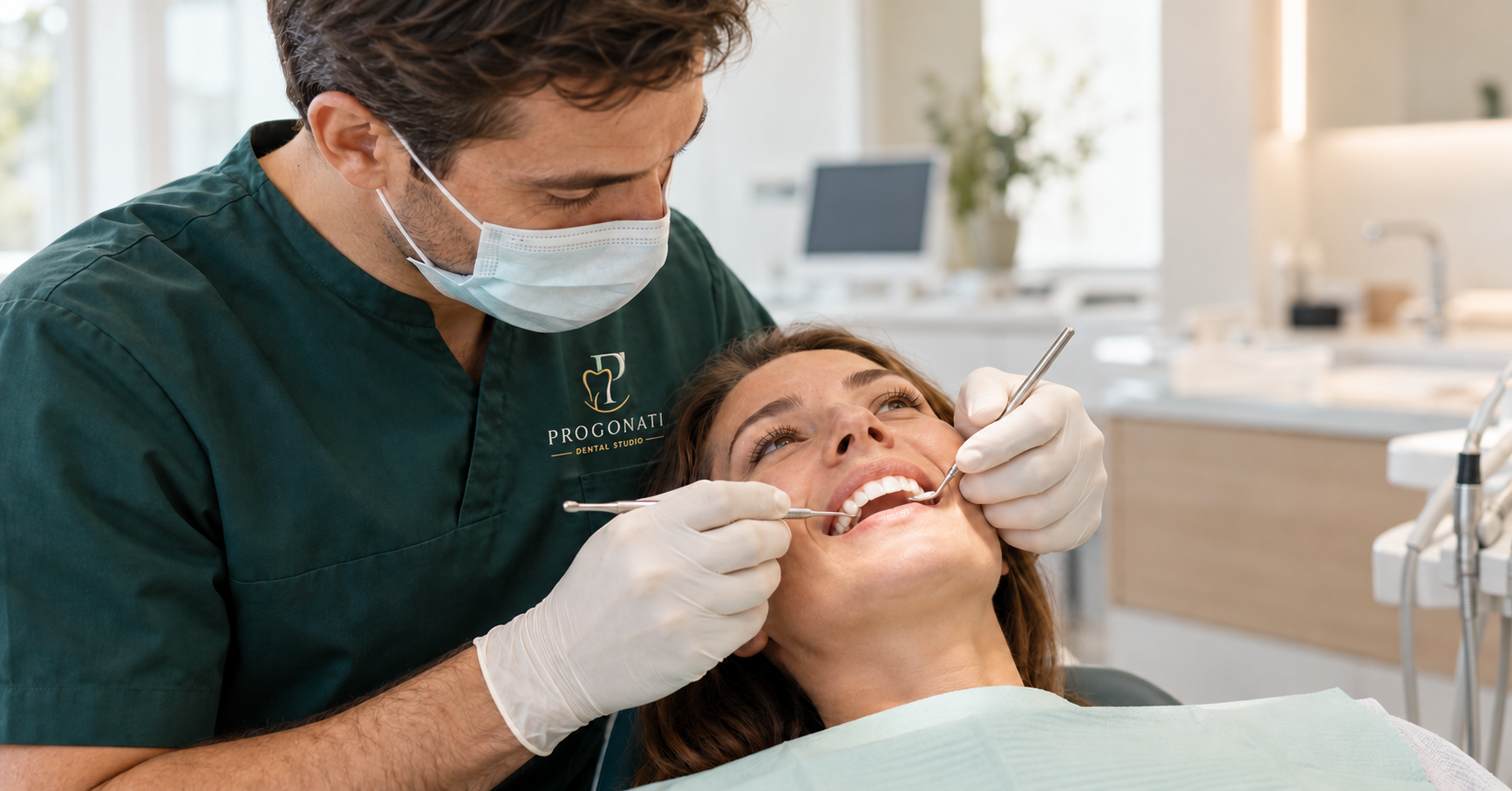
Bleeding gums, persistent bad breath, receding gums or teeth that have started to feel loose should not simply be accepted as part of getting older. They may be signs of periodontitis, an advanced form of gum disease that damages the tissues and bone supporting the teeth.
The reassuring news is that a diagnosis of periodontitis does not automatically mean that your teeth need to be removed. Even some severely affected teeth may be retained when the condition is diagnosed properly, treated according to evidence-based guidelines and monitored through a structured maintenance programme.
The outcome depends on several factors, including the amount of supporting bone remaining, the depth of the periodontal pockets, tooth mobility, involvement of the roots, smoking, diabetes control, oral hygiene and attendance at follow-up appointments.
For this reason, each tooth must be assessed individually. A photograph, an online message or a panoramic X-ray alone cannot determine whether a tooth can be saved.
Quick answer: Periodontitis cannot be treated with mouthwash or a routine scale and polish alone. However, it can often be controlled and stabilised through professional periodontal treatment, effective home care and personalised long-term maintenance.[1,2]
What is periodontitis?
Periodontitis is a chronic inflammatory disease associated with an imbalance in the bacterial biofilm around the teeth.
In susceptible people, the interaction between these bacteria and the body’s immune response gradually damages the structures that keep each tooth in place:
- the gums;
- the periodontal ligament;
- the root surface;
- the alveolar bone.
The word “pyorrhoea” is sometimes still used to describe advanced gum disease, but it is an outdated term. The correct clinical term is periodontitis.
The condition does not behave in the same way in every patient. Modern periodontal classification therefore uses:
- a stage, from I to IV, to describe the severity, complexity and consequences of the disease;
- a grade, from A to C, to estimate how quickly the disease may progress and to account for important risk modifiers such as smoking and diabetes.[3,4]
Gingivitis and periodontitis are not the same
“Gum disease” is often used as a general term, but it includes different conditions.
Gingivitis affects the gums and may cause redness, swelling and bleeding. At this stage, there is no irreversible loss of the bone and attachment supporting the teeth.
Periodontitis develops when inflammation extends into the deeper supporting tissues. Periodontal pockets form, the gums may recede and the surrounding bone is progressively lost.
| FeatureGingivitisPeriodontitis | ||
| Gum inflammation | Yes | Yes |
| Bleeding gums | Common | Common, although it may be less obvious in smokers |
| Bone loss | No | Yes |
| Loss of periodontal attachment | No | Yes |
| Loose teeth | Not usually | Possible in advanced disease |
| Treatment | Improved plaque control and professional cleaning | Structured periodontal treatment and long-term maintenance |
Gingivitis can usually be reversed when it is identified and managed early. Once bone and periodontal attachment have been lost, they do not simply grow back on their own.
The aim of periodontitis treatment is to control the inflammation, prevent or slow further damage, reduce periodontal pockets and preserve comfortable function for as long as possible.
What are the symptoms of periodontitis?
Periodontitis can progress quietly and may not cause pain during its early stages. This is why waiting for a tooth to become painful or loose can allow the disease to become considerably more advanced.
Signs and symptoms may include:
- bleeding when brushing or cleaning between the teeth;
- gums that bleed when eating firm foods;
- red, swollen or tender gums;
- persistent bad breath;
- an unpleasant taste in the mouth;
- receding gums;
- teeth that appear longer;
- new gaps developing between the teeth;
- pus around the gum margin;
- sensitive teeth;
- discomfort when chewing;
- a change in the way the teeth meet;
- teeth drifting from their original position;
- loose teeth.
The NHS advises arranging a dental appointment if the gums are painful, swollen or bleeding, or if bad breath persists. Urgent dental advice is particularly important when teeth become loose or a swelling develops.[5]
Are bleeding gums normal?
No. Healthy gums should not bleed regularly.
Bleeding is commonly a sign of inflammation. It does not prove on its own that periodontitis is present, because it can also occur with gingivitis, but it should not be ignored.
Smokers may experience less visible bleeding because tobacco affects the blood supply and inflammatory response of the gums. The absence of bleeding therefore does not necessarily mean that the periodontal tissues are healthy.
What causes periodontitis?
Periodontitis does not have one single cause. Dental plaque initiates the inflammatory process, but the amount of damage depends on the interaction between bacteria, the immune response, individual susceptibility, lifestyle and general health.
Plaque and calculus
Dental plaque is a bacterial biofilm that continually forms on the teeth.
When plaque is not removed effectively, it matures and encourages inflammation. It can also mineralise into calculus, commonly known as tartar, which creates a rough surface where more biofilm can collect.
Established calculus cannot be removed effectively with a toothbrush or mouthwash. It requires professional instrumentation.
Smoking and tobacco use
Smoking is one of the most important modifiable risk factors for periodontitis.
It is associated with:
- more severe attachment and bone loss;
- faster disease progression;
- a poorer response to treatment;
- delayed healing;
- a greater risk of tooth loss.
Stopping smoking is not merely an optional lifestyle suggestion. It is an important part of periodontal treatment and long-term risk reduction.[1]
Diabetes
Diabetes, particularly when blood glucose is not well controlled, can increase both the risk and severity of periodontitis.
The relationship works in both directions. Diabetes can intensify periodontal inflammation, while uncontrolled periodontitis may make blood glucose more difficult to manage. Patients with diabetes may therefore benefit from coordinated care between their dentist and medical team.[1,4]
Family history and individual susceptibility
People with similar oral hygiene habits do not always experience the same degree of periodontal damage.
A family history of early tooth loss does not make future tooth loss inevitable, but it may indicate greater susceptibility and make early assessment particularly important.
Areas that are difficult to clean
Some local factors can make plaque control more challenging, including:
- crowded teeth;
- poorly contoured fillings or restorations;
- restorations that extend below the gum;
- gum recession;
- exposed root surfaces;
- complex molar anatomy;
- furcation involvement between the roots;
- dental work that is difficult to clean around.
Irregular periodontal maintenance
Periodontitis is a long-term condition. Even after successful active treatment, inflammation can return if professional monitoring stops.
Long-term research consistently shows that regular supportive periodontal care is one of the most important factors in preserving teeth.[6–8]
How is periodontitis diagnosed?
A reliable diagnosis cannot be made from symptoms, photographs or a panoramic X-ray alone.
A thorough periodontal assessment may include the following.
Medical and dental history
The clinician should review:
- smoking or tobacco use;
- diabetes and blood glucose control;
- medicines;
- previous gum treatment;
- family history;
- previous tooth loss;
- changes in tooth position;
- frequency of dental attendance;
- the speed at which symptoms have developed.
Periodontal probing
A fine, millimetre-marked instrument called a periodontal probe is gently placed around each tooth to measure the space between the tooth and gum.
This produces a periodontal chart and identifies areas where pockets have developed.
Bleeding on probing
Bleeding after gentle probing indicates inflammation at the examined site. It helps the clinician assess the location and extent of disease and monitor the response to treatment.
Attachment levels and gum recession
These measurements show how much periodontal support has been lost, even when the visible gum margin has changed position.
Tooth mobility and drifting
A loose tooth must be assessed alongside bone support, inflammation, bite forces and possible endodontic or restorative problems.
Furcation involvement
Molars have more than one root. Bone loss may reach the area where the roots divide, known as the furcation.
Furcation involvement can make treatment and cleaning more difficult, but it does not automatically mean that the tooth is beyond saving.
Appropriate dental X-rays
X-rays help show the distribution and pattern of bone loss and identify factors that may influence treatment planning.
Staging and grading
The information is brought together to determine the stage and grade of periodontitis.
Stage IV disease may affect chewing, tooth position, appearance and the stability of the entire dentition. In these cases, successful care may require periodontal treatment combined with restorative, orthodontic or prosthetic planning.[2]
Can teeth affected by periodontitis be saved?
In many cases, yes — but not in every case.
The right question is not simply, “Is the tooth loose?” A proper prognosis considers:
- how much bone remains;
- the depth and distribution of the pockets;
- the degree and cause of mobility;
- furcation involvement;
- the presence of fractures;
- deep decay;
- root canal or restorative complications;
- the position and function of the tooth;
- smoking;
- diabetes control;
- oral hygiene;
- response to initial treatment;
- willingness to attend long-term maintenance.
Does a loose tooth always need to be removed?
No.
Tooth mobility is associated with a higher long-term risk of tooth loss, but it should not be used as the sole reason for extraction.
A 2024 systematic review and meta-analysis found that mobile teeth were at greater risk of extraction or loss than non-mobile teeth. However, the figures describe risk across groups of patients; they do not predict with certainty what will happen to one individual tooth.[9]
In some cases, mobility decreases after inflammation has been controlled. In others, bite forces or secondary occlusal trauma also need to be managed. Occasionally, splinting may be considered as part of a wider treatment plan.
A final decision should be made only after a full assessment and, where appropriate, after initial periodontal treatment and reassessment.
What does the latest research tell us?
A study published in January 2026 evaluated patients with stage III and IV periodontitis treated according to the European Federation of Periodontology pathway.
Guideline-based treatment achieved the defined clinical treatment targets in 93.3% of treated sites and in approximately half of the patients. Outcomes were less favourable around posterior teeth, deeper initial pockets, sites with plaque and teeth with advanced furcation involvement.[10]
This provides encouraging evidence that even advanced disease can respond to structured care. However, it was a retrospective study in a university specialist setting and does not guarantee identical outcomes for every patient.
A further study published in July 2026 followed 70 patients receiving supportive periodontal care for an average of more than 36 years.
Although 97% had initially presented with stage III or IV periodontitis, long-term tooth loss remained relatively low. Residual pockets of at least 6 mm and advanced furcation involvement were associated with greater risk.[6]
The researchers also highlighted an important limitation: only a small proportion of the originally eligible patients remained available after more than three decades. The findings are valuable, but should not be interpreted as a guarantee.
An earlier Italian cohort followed patients for 30 years after active periodontal treatment. With strict maintenance appointments every three to six months, most teeth were retained. Age, molar anatomy, deeper pockets, greater bone loss and mobility influenced the risk of future tooth loss.[7]
The practical message is clear: an affected tooth should not be removed automatically simply because it is mobile or appears to have substantial bone loss. Its prognosis should be assessed individually, and the value of long-term maintenance should not be underestimated.
How is periodontitis treated?
The European Federation of Periodontology and the British Society of Periodontology recommend a structured, step-by-step approach.[1,11]
The exact treatment depends on the stage and grade of disease, individual risk factors and the response to each phase.
Step 1: oral hygiene and risk-factor control
The first step creates the conditions needed for the rest of the treatment to succeed.
It may include:
- explaining the diagnosis and likely causes;
- agreeing realistic treatment goals;
- personalised toothbrushing instruction;
- choosing suitable interdental brushes or other cleaning aids;
- professional removal of plaque and calculus above the gum line;
- correcting plaque-retentive factors where possible;
- support with stopping smoking;
- improving diabetes control;
- encouraging consistent daily home care.
This phase is not enough on its own to treat deep periodontal pockets, but it forms the foundation of every later step.
Step 2: subgingival instrumentation
Subgingival instrumentation removes plaque and calculus from root surfaces beneath the gum line.
Patients may also hear this described as:
- non-surgical periodontal treatment;
- deep cleaning;
- scaling and root planing;
- root surface debridement.
Treatment may be completed over several appointments, and local anaesthetic can be used when required.
The purpose is not simply to “scrape the teeth”. It is to disrupt the biofilm, reduce inflammation and create an environment in which the tissues can heal and the patient can maintain effective plaque control.
Periodontal reassessment
After an appropriate healing period, the periodontal measurements are repeated.
The reassessment identifies:
- sites that have become stable;
- areas that still bleed;
- residual deep pockets;
- sites that require further instrumentation;
- defects that may benefit from periodontal surgery.
The EFP guideline identifies pockets deeper than 4 mm that continue to bleed, and pockets of 6 mm or more, as important signs that the desired treatment endpoints have not yet been achieved.[1]
Step 3: treatment of residual pockets
When deep pockets or complex defects remain, treatment may include:
- repeated subgingival instrumentation;
- access-flap surgery;
- resective periodontal surgery;
- regenerative periodontal surgery;
- management of selected intrabony defects;
- treatment of furcation defects.
Regenerative surgery is not appropriate for every area of bone loss.
Its suitability depends on the shape of the defect, the tooth’s condition, smoking, plaque control, general health and the patient’s ability to attend long-term maintenance.
Step 4: supportive periodontal care
Supportive periodontal care is not simply an occasional scale and polish. It is an essential part of treatment.
Maintenance appointments may include assessment of:
- pocket depths;
- bleeding;
- tooth mobility;
- plaque control;
- calculus;
- smoking;
- diabetes;
- changes around existing dental work;
- signs of disease recurrence.
The interval is personalised. Patients at higher risk may initially require appointments approximately every three months, while others may be reviewed at a different interval according to their clinical condition.
A systematic review published in 2026 found that tooth loss remained low over 10–20 years among patients who adhered to strict supportive periodontal care. Long-term differences between certain initial surgical techniques also became smaller when consistent maintenance was provided.[8]
This reinforces a central point: the durability of the result depends not only on the active treatment, but also on what happens afterwards.
Do antibiotics, lasers or mouthwashes cure periodontitis?
Antibiotics
Systemic antibiotics are not recommended routinely for every patient with periodontitis.
Guidelines allow their use to be considered as an addition to subgingival instrumentation in selected situations, such as certain severe, rapidly progressing, generalised cases in younger adults.[1]
Antibiotics do not:
- remove calculus;
- detach established biofilm from root surfaces;
- replace professional instrumentation;
- compensate for poor plaque control.
Unnecessary use may cause side effects and contribute to antimicrobial resistance.
Laser treatment
Some lasers may be used as additional tools in selected protocols. However, a laser does not replace diagnosis, mechanical removal of deposits, risk-factor control or supportive periodontal care.
The presence of advanced technology alone does not prove that it is the most appropriate treatment for a particular tooth or defect.
Mouthwash
A mouthwash may be prescribed for a limited period and a specific indication, but mouthwash alone cannot cure periodontitis.
It cannot remove established calculus beneath the gum or make a deep pocket accessible. Prolonged use of certain antiseptic mouthwashes may also cause staining, altered taste or other unwanted effects.
When should you seek dental care promptly?
Arrange an assessment without unnecessary delay if:
- a tooth has started to feel loose;
- a tooth is changing position;
- new gaps have appeared;
- the gums bleed frequently or spontaneously;
- pus is present around the gum;
- a swelling has developed;
- biting or chewing feels different;
- you have diabetes together with bleeding or loose teeth;
- you are considering dental implants.
A sudden painful swelling or discharge may indicate a periodontal abscess or another acute dental condition.
Seek urgent medical or dental help if swelling is spreading quickly or is accompanied by difficulty breathing, difficulty swallowing or significant systemic illness.
Periodontitis and dental implants
Replacing a tooth without controlling the underlying periodontal disease does not remove the biological risk.
A patient with a history of periodontitis requires careful planning, including:
- control of active inflammation before implant treatment;
- assessment of the gums and available bone;
- smoking cessation;
- diabetes control;
- effective home cleaning;
- long-term professional maintenance.
A 2026 multicentre study evaluated 3,555 dental implants and reported high five-year survival. However, previous tooth loss caused by periodontitis was associated with a higher risk of implant failure.
Among patients who had lost teeth because of periodontitis, implant survival was better in those who attended regular supportive periodontal care than in those who did not maintain consistent follow-up.[12]
This does not mean that people with a history of periodontitis cannot receive implants. It means that the disease must first be controlled and that long-term maintenance remains essential after implant treatment.
Travelling from the UK for periodontal or restorative treatment
For patients considering dental treatment in Albania, remote communication can be helpful for initial orientation, but it cannot replace an in-person periodontal examination.
A safe and transparent pathway should include:
- an initial review of your concerns, photographs and available dental records;
- a clinical examination in the dental practice;
- periodontal measurements and appropriate X-rays;
- an explanation of which teeth may be retained;
- a written, personalised treatment plan;
- realistic information about the number of appointments or journeys required;
- clear aftercare and maintenance instructions.
Complex decisions about removing teeth, bone grafting or placing implants should not be finalised from photographs alone.
If you already have a dentist or hygienist in the UK, continuing routine maintenance after returning home can help protect the result. Relevant X-rays, periodontal charts and treatment information should be kept as part of your ongoing records.
Frequently asked questions about periodontitis
Can periodontitis be cured permanently?
Treatment can control the inflammation and stabilise the condition, but someone who has experienced periodontitis remains susceptible to recurrence.
Effective home care and regular professional maintenance are therefore required over the long term.
Can a loose tooth become firm again?
Sometimes mobility reduces after inflammation has been controlled and the tissues have healed.
In other cases, mobility remains because of the amount of support already lost or because of bite-related factors. Each tooth requires an individual assessment.
Can lost gum and bone grow back?
Inflamed gums may shrink and fit more closely around the teeth after treatment, but lost periodontal support does not reliably grow back by itself.
Selected defects may be suitable for regenerative periodontal surgery, which can produce partial regeneration under the right conditions.
Is periodontitis contagious?
Oral bacteria can be exchanged between people, but periodontitis is not a straightforward contagious illness such as influenza.
Disease develops through a combination of bacterial biofilm, individual susceptibility, immune response and risk factors. Ordinary contact with someone who has periodontitis does not mean that you will automatically develop it.
Can mouthwash get rid of gum disease?
No. Mouthwash may be useful as a short-term addition in selected circumstances, but it cannot remove calculus or established biofilm beneath the gums and does not replace professional treatment.
Is periodontal treatment painful?
Sensitive areas can be treated under local anaesthetic.
After treatment, some patients experience temporary sensitivity, mild tenderness or more noticeable spaces between the teeth as the swollen gums settle. The clinician should explain the expected benefits, limitations and possible side effects before treatment begins.
How often is periodontal maintenance needed?
There is no single interval that suits everyone.
Higher-risk patients may initially require maintenance approximately every three months. The interval should be adjusted according to bleeding, residual pockets, oral hygiene, smoking, diabetes and the previous pattern of disease.
Can I have dental implants after periodontitis?
Often, yes — but only after the disease has been controlled and the gums, bone, smoking status, diabetes and ability to maintain the implants have been assessed.
A history of periodontitis means that careful long-term monitoring is especially important.
Measure first, then decide
Periodontitis can be silent, but tooth loss is not inevitable.
The most important step is a complete diagnosis followed by structured treatment, reassessment and long-term supportive care.
If your gums bleed, your teeth appear longer, new gaps have developed or a tooth has started to feel loose, do not wait for the problem to become painful.
Contact Progonati Dental Studio in Fier, Albania, to arrange a periodontal assessment and understand which teeth may be retained, what treatment may be required and how the result can be maintained over time.
Medical disclaimer: This article is for general information only. It does not replace an examination, diagnosis or personalised treatment plan. Outcomes vary according to the clinical condition, risk factors, response to treatment and adherence to maintenance.
Scientific and clinical sources
- Sanz M, Herrera D, Kebschull M, et al. Treatment of stage I–III periodontitis—The EFP S3 level clinical practice guideline. Journal of Clinical Periodontology. 2020;47(Suppl 22):4–60. DOI: 10.1111/jcpe.13290
- Herrera D, Sanz M, Kebschull M, et al. Treatment of stage IV periodontitis: The EFP S3 level clinical practice guideline. Journal of Clinical Periodontology. 2022;49(Suppl 24):4–71. DOI: 10.1111/jcpe.13639
- Papapanou PN, Sanz M, Buduneli N, et al. Periodontitis: Consensus report of Workgroup 2 of the 2017 World Workshop. Journal of Clinical Periodontology. 2018;45(Suppl 20):S162–S170. DOI: 10.1111/jcpe.12946
- Tonetti MS, Greenwell H, Kornman KS. Staging and grading of periodontitis: Framework and proposal of a new classification and case definition. Journal of Clinical Periodontology. 2018;45(Suppl 20):S149–S161. DOI: 10.1111/jcpe.12945
- NHS. Gum disease. NHS guidance
- Cyris M, Bartels P, Kahl M, et al. Tooth Loss During Supportive Periodontal Care: A Three Decades Retrospective Study in a University Setting. Journal of Clinical Periodontology. 2026;53(9):1481–1490. DOI: 10.1111/jcpe.70173
- Agudio G, Buti J, Bonaccini D, Pini Prato G, Cortellini P. Longevity of teeth in patients susceptible to periodontitis after active therapy and 30 years of supportive periodontal care. Journal of Clinical Periodontology. 2023;50(4):520–532. DOI: 10.1111/jcpe.13770
- Rattu V, Patel T, Loke J, Petsos H, Nibali L. Long-term clinical benefits of periodontal interventions in strict supportive periodontal care: A systematic review. Journal of Periodontology. 2026;97(3):450–472. DOI: 10.1002/jper.70027
- Peditto M, Rupe C, Gambino G, et al. Influence of mobility on the long-term risk of tooth extraction or loss in periodontitis patients: A systematic review and meta-analysis. Journal of Periodontal Research. 2024;59(6):1047–1061. DOI: 10.1111/jre.13286
- Aimetti M, et al. Outcomes of Active Periodontal Therapy Following the EFP S3 Treatment Guideline in Stage III–IV Periodontitis Patients. Journal of Clinical Periodontology. 2026. DOI: 10.1111/jcpe.70087
- West N, Chapple I, Claydon N, et al. BSP implementation of European S3-level evidence-based treatment guidelines for stage I–III periodontitis in UK clinical practice. Journal of Dentistry. 2021;106:103562. DOI: 10.1016/j.jdent.2020.103562
- Lee D, Ahn S, Park JY, et al. Supportive Periodontal Therapy Improves Implant Survival in Patients With a History of Periodontitis: A Retrospective Multicentre Cohort Study of 3,555 Implants. Clinical Oral Implants Research. 2026. DOI: 10.1111/clr.70103